 Cars And Track Staff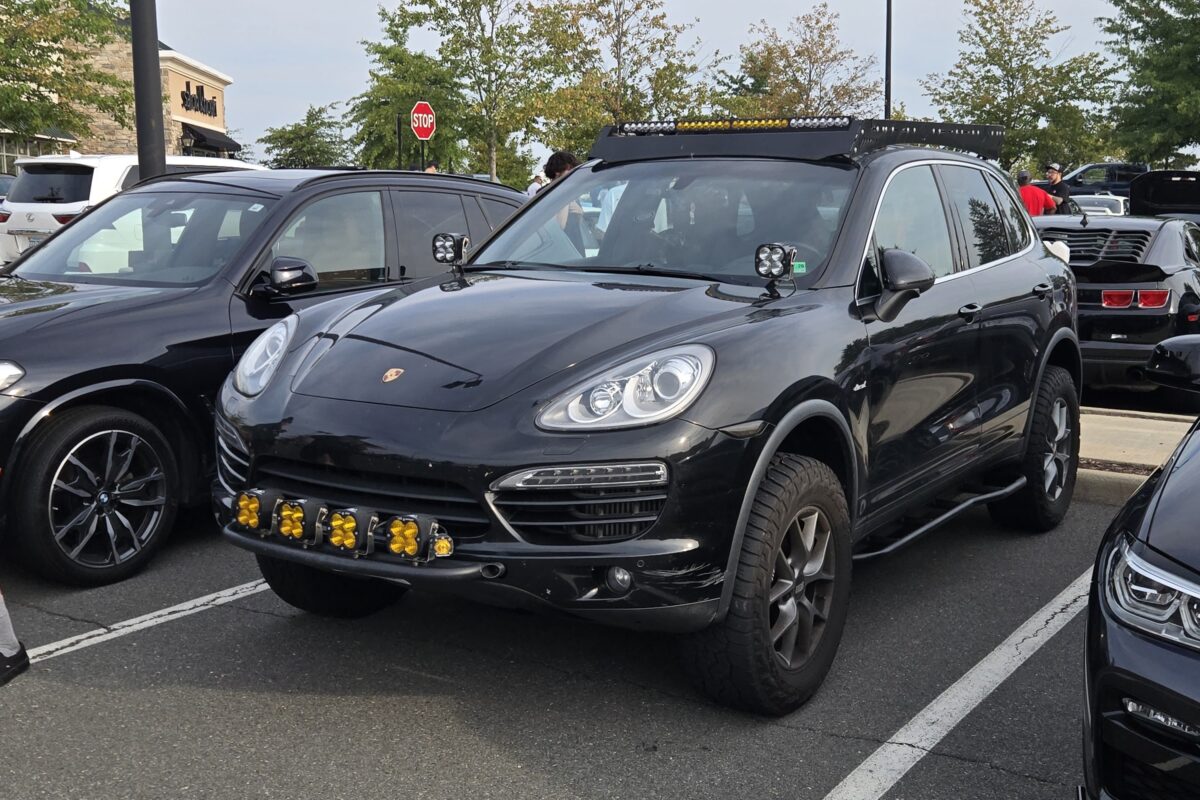
Welcome back to another edition of The Proving Ground, where we help you justify questionable financial decisions in the name of “automotive soul.” Today’s conundrum comes from a reader who is moving to the Pacific Northwest—a land of endless rain, scenic mountain passes, and overpriced coffee—and needs a Porsche Cayenne to fit the vibe.
Our reader is torn between two flavors of the 958-generation GTS:
- The 958.1 (2014): 4.8-liter naturally aspirated V8. 120k miles, major surgery (timing chains) already done.
- The 958.2 (2017): 3.6-liter twin-turbo V6. Similar miles, updated looks, and better tech.
They’re priced within a few thousand dollars of each other. Let’s break down whether you should go for the “Old School” rumble or the “New School” boost.
The 2014 GTS is widely considered the high-water mark for the Cayenne’s personality. Why? Because it’s the last time Porsche stuffed a naturally aspirated V8 into a mid-sized SUV without a turbocharger to muffle the sound. - The Sound: When you cold-start a 2014 GTS, it doesn’t just start; it announces itself. The sport exhaust on these is legendary—all snaps, crackles, and pops.
- The Power Delivery: You mentioned it felt “slower than expected.” That’s because it’s an N/A engine. You have to rev it to find the 420 hp. It’s a linear, rewarding experience that feels like a sports car in a heavy suit.
- The “Maintenance” Win: You found one with the timing chains done. In Porsche-speak, that’s like finding a unicorn that’s already had its braces removed. That is a massive service item that saves you thousands down the road.
The Logic Factor: The 3.6L Twin-Turbo V6
In 2015, Porsche swapped the V8 for a 3.6-liter twin-turbo V6. On paper, it’s “better” in almost every measurable way. - The Performance: It has more power (440 hp) and way more torque. Because of the turbos, that torque hits much lower in the rev range. If the 2014 felt slow, the 2017 will feel like a rocket ship. It’s the “point and shoot” king of the highway.
- The Modernity: The 2017 benefits from the PCM 4.0 infotainment system. It’s faster, crisper, and generally feels like it belongs in this decade.
- The PNW Utility: Living in the Pacific Northwest means mountain passes. Turbos love altitude. While the N/A V8 will gasp for air as you climb toward Mount Rainier, the 2017 GTS will keep huffing boost like nothing happened.
The Reality Check: Reliability
Both of these cars share the same “Achilles’ Heel”: the Transfer Case. On 958 Cayennes, these are known to stutter and fail.
Pro-Tip: Check if either car has had its transfer case replaced under Porsche’s extended warranty. If not, budget for a potential “shudder” in your future.
The 2014 has the camshaft adjuster bolt issue, but since your candidate had the timing chain work done, there’s a high chance those were addressed. The 2017 V6 is generally robust but has its own “V6 Turbo” quirks like potential oil leaks from the timing cover.
The Verdict
If you were buying a commuter to sit in Seattle traffic, I’d tell you to take the 2017. It’s easier to live with, the tech is better, and the low-end torque makes city driving effortless.
But you’re buying a GTS. The GTS is the “enthusiast’s trim.” It’s the one you buy because you want to feel something.
The 2017 is a faster, more efficient machine. The 2014 is a special event. That 4.8L V8 is a dying breed, and at 120,000 miles with the big maintenance already checked off, it’s arguably the safer enthusiast bet. You can always add a CarPlay dongle to an older Porsche, but you can’t add “V8 Soul” to a V6.
Our Recommendation: Get the 2014 GTS. The sound of that V8 echoing off the trees in the Cascades will make up for the slightly older buttons on the dashboard.
