
 Cars And Track Staff
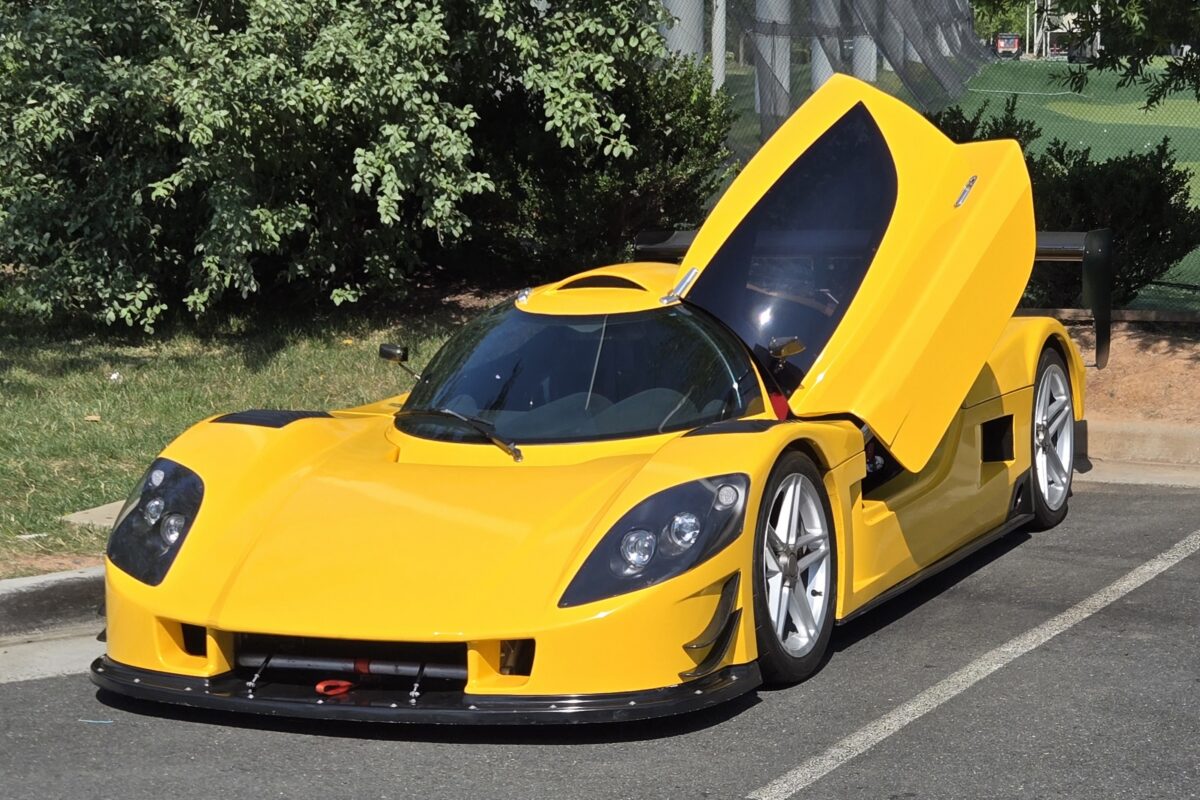
If you hang around the track or frequent high-end local meetups long enough, you develop a decent eye for spotting rare machinery. You can spot the difference between a real Shelby Cobra and a kit replica from 50 feet away. You know a Porsche 4.0-liter engine note before the car even rounds the corner.
But this past weekend, a low-slung, absolute weapon of a machine rolled into our local show-and-shine and ignited a massive tech-versus-human debate that lasted all morning.
The question on everyone’s lips: What exactly are we looking at here?
To the untrained eye, it’s just a generic “race car for the street.” But to the gearheads in attendance, the crowd immediately split into two very passionate camps: Team Superlite SL-C and Team Ultima GTR.
The Tale of the Tape: How to Spot the Difference
It is easy to see why people get confused. Both of these vehicles are component/kit supercars designed to bring Le Mans-level performance and styling to a street-legal package. They are ultra-low, mid-engined, lightweight, and usually powered by monstrous, American V8s (often an LS or LT crate motor).
However, when you dig into the design languages, they come from entirely different schools of thought.
If you look at the nose of a Superlite SL-C, the fenders curve smoothly over the wheels with fluid, aerodynamic elegance. The Ultima GTR, on the other hand, looks like it wants to punch the air out of its way with mechanical, razor-sharp ducting and a distinctively aggressive stance.
The AI Visual Identification Test
As a group of us stood around arguing over the finer points of front splitters and canopy glass, one of our writers decided to settle it the modern way. He whipped out a popular mobile AI vision tool, snapped a photo of the car’s front three-quarter view, and asked it for a definitive identification.
The AI didn’t hesitate. It immediately fired back a detailed breakdown of the vehicle’s classic British heritage, raving about its legendary track-record history.
AI Analysis: “This vehicle is an Ultima GTR, a high-performance track car manufactured by Ultima Sports in Hinckley, Leicestershire, England. Note the distinct mid-engine proportions and central bubble canopy.”
A collective “Ah-ha!” went up from the Ultima camp. Tech had spoken. Case closed, right?
Not quite.
The Spoiler: Trust Your Local Builder, Not the Algorithm
Just as Team Ultima was celebrating their victory, the owner walked back over to the car, holding a fresh cup of coffee. We laughed, told him about the raging debate, and asked him to break the tie.
He chuckled, shook his head, and pointed to the registration plate and the custom stitching on the seats.
“It’s a Superlite SL-C,” he said. “Spent over 250 hours building it in my garage.”
It turns out the machine learning model got completely tripped up by the low silhouette, the giant rear wing, and the radical endurance-racer dimensions. The AI saw a bubble cockpit and a mid-engine layout and defaulted to the more globally famous UK icon, completely missing the smooth, flowing American lines of the SL-C.
It just goes to show: while artificial intelligence can rewrite your resume or summarize a textbook, nothing beats the word of the guy who actually turned the wrenches.
