
 Cars And Track Staff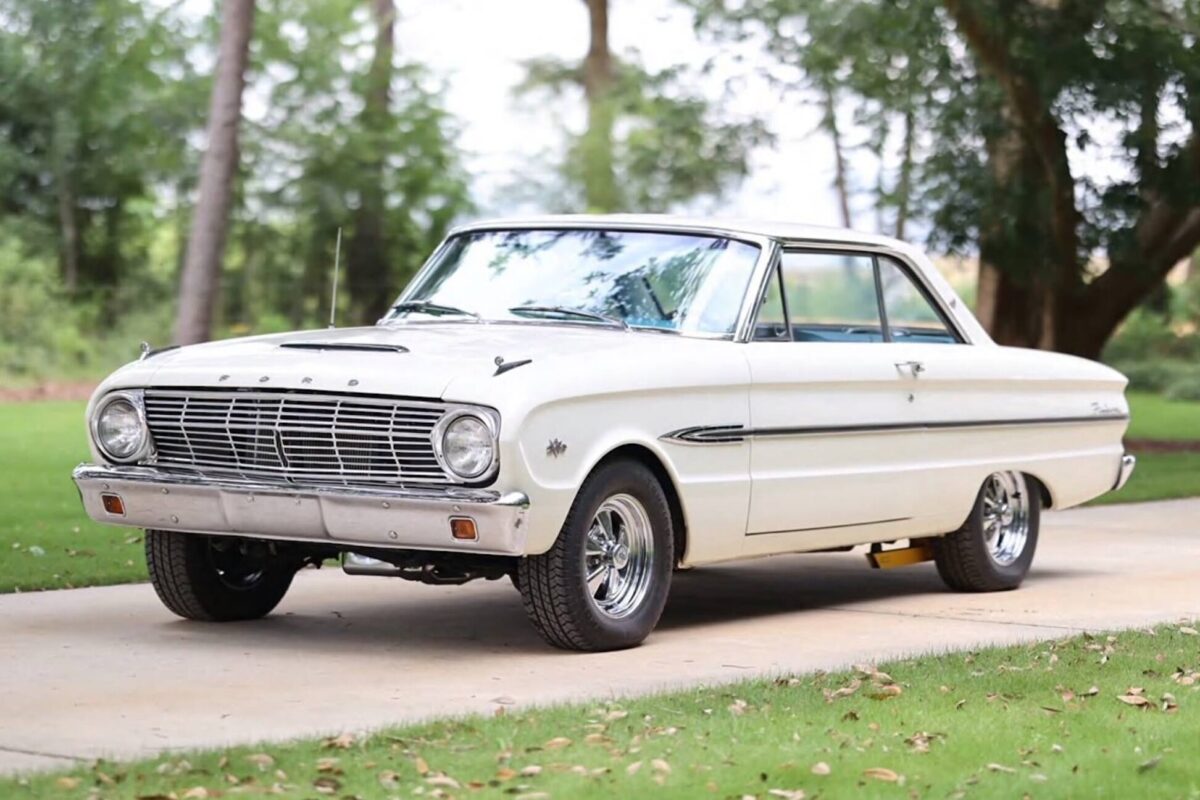
My buddy TC recently swung by, and we got to talking about the hilarious logic of 80s parenting. Back then, TC’s parents decided his sisters’ cars—a 1982 Toyota Tercel and a 1980 VW Rabbit—were far too “unsafe” for their precious daughters. Naturally, they did the responsible thing: bought the girls shiny new Hondas and handed the “rolling coffins” down to TC.
Look, having two cars in high school is a total power move, even if they’re economy hatchbacks. But TC had his eye on something significantly more life-threatening: a 1963 Ford Falcon.
The Anatomy of a Falcon Fail
TC wasn’t exactly a “grease monkey,” and a 27-year-old Ford doesn’t just age gracefully; it decomposes. This car didn’t just have quirks; it had a death wish:
- Human Exhaust Hangers: The exhaust pipe had a habit of dragging on the pavement unless the passenger in the back seat literally held it up via a coat hanger or sheer willpower.
- Optional Braking: It featured four-wheel drum brakes that treated “stopping” as a vague suggestion rather than a requirement.
- The Irony: It was a certified deathtrap, yet somehow, it always delivered us to our destination without a scratch.
The Safety Goalpost
It’s wild how fast the “safety” bar moves. A sensible family sedan from 1963 was considered a public health hazard by 1980—and that was decades before we had side-curtain airbags, crumple zones, and cars that beep at you if you so much as sneeze near the lane line.
In 1963, “safety features” were basically just a prayer and a solid steel dashboard. The Falcon was essentially a rigid metal box designed to protect the engine, not the occupants. With a non-collapsible steering column aimed directly at your chest like a medieval spear and a “lap belt” that offered all the security of a lukewarm hug, a collision meant the car stayed intact while you… didn’t. There were no crumple zones to absorb energy; the car simply transferred every bit of kinetic force directly into your skeleton, relying on the sheer thickness of Detroit steel to keep the exterior looking decent for your wake.
Fast forward to today, and a modern car is a rolling laboratory of survival physics. We’ve traded “heft” for intelligent destruction; modern chassis are designed to fold like origami in a crash, sacrificing the car to save the person. While the Falcon gave you a metal dash and a hope for the best, a 2026 sedan surrounds you with a 360-degree cocoon of airbags, pre-tensioning belts, and automated emergency braking systems that intervene before you even realize you’re distracted. In the Falcon, you were the softest thing in the cabin; in a modern car, you’re the most protected asset in a high-tech fortress. I am glad we never tested those safety features, though certainly it wasn’t because of a lack of effort.
